Table of Contents
- Why Fall Prevention Matters for Seniors
- Home Safety Checklist for Seniors
- Home Modifications to Prevent Falls
- Balance Exercises for Seniors to Reduce Fall Risk
- Fall Prevention Tips for Caregivers
- Medication Review and Vision Checks
- When to Seek Professional In-Home Support
- Conclusion
- Frequently Asked Questions
Last Updated: October 11, 2026
Why Fall Prevention Matters for Seniors
Falls are one of the leading causes of injury among older adults (the CDC). A senior who falls once faces a dramatically higher risk of falling again, creating a cycle of fear, reduced mobility, and loss of independence. (Source: the Centers for Disease Control and Prevention (CDC))
At Live Easy Home Care, we’ve worked with families across Northern New Jersey who’ve experienced the aftermath of a fall. What we’ve learned is that 7 ways to prevent falls for seniors at home aren’t just safety tips, they’re the difference between maintaining independence and losing it. The good news is that most falls are preventable with the right approach.
The research is clear: preventing falls before they happen is far more effective than managing the aftermath. This guide walks you through practical, evidence-based strategies that reduce fall risk and help seniors maintain the dignity and independence they value.
Home Safety Checklist for Seniors
Most falls happen in familiar spaces like bedrooms, bathrooms, and kitchens. A systematic safety checklist helps you identify and eliminate these risks before they become problems.
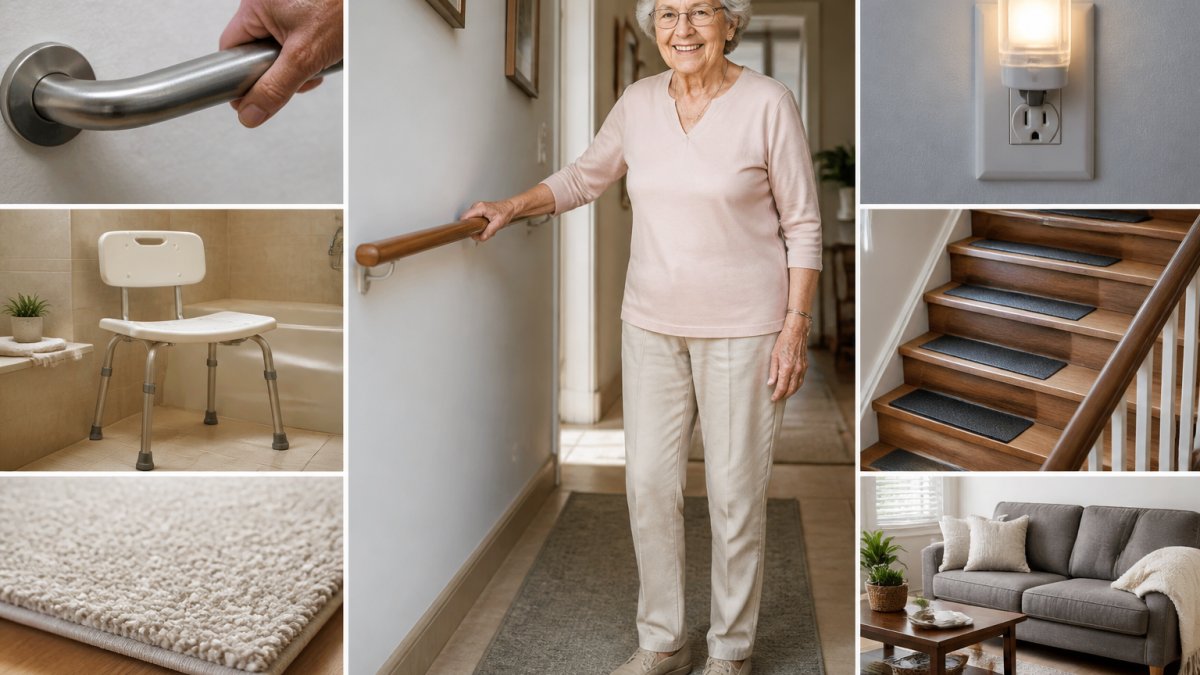
Install bright bulbs in hallways, bathrooms, and stairwells. Add night lights in bedrooms and bathrooms for safe nighttime navigation. Motion-activated lights work well in hallways and entryways.
Remove throw rugs, electrical cords, and items left on floors. Keep frequently used items at waist height to avoid excessive bending or reaching. Clear pathways carefully, especially in older homes with tight spaces.
Ensure handrails are secure and extend the full length of the staircase. Mark the top and bottom steps with contrasting tape. If stairs are a significant fall risk, consider a stair lift or rearrange living spaces to minimize stair use.
Install grab bars near the toilet and shower. Use a shower chair and non-slip mat. Keep the floor dry and ensure adequate lighting. Consider a raised toilet seat for easier transfers.
| Safety Area | Key Hazards | Action Items |
|---|---|---|
| Lighting | Dim areas, shadows | Install bright bulbs, add night lights |
| Floors | Clutter, rugs, cords | Remove obstacles, secure rugs |
| Stairs | Unmarked steps, loose rails | Mark steps, secure handrails |
| Bathroom | Wet floors, slippery tubs | Add grab bars, use non-slip mats |
| Bedroom | Tripping hazards, poor lighting | Clear pathways, add night lights |
Walk through your home at night using only a flashlight. This reveals which areas are genuinely dark and where seniors might struggle to see. It’s a practical way to identify lighting gaps you might miss during the day.
Home Modifications to Prevent Falls
Strategic home modifications can dramatically reduce fall risk, ranging from simple additions to substantial renovations based on your parent’s mobility level.
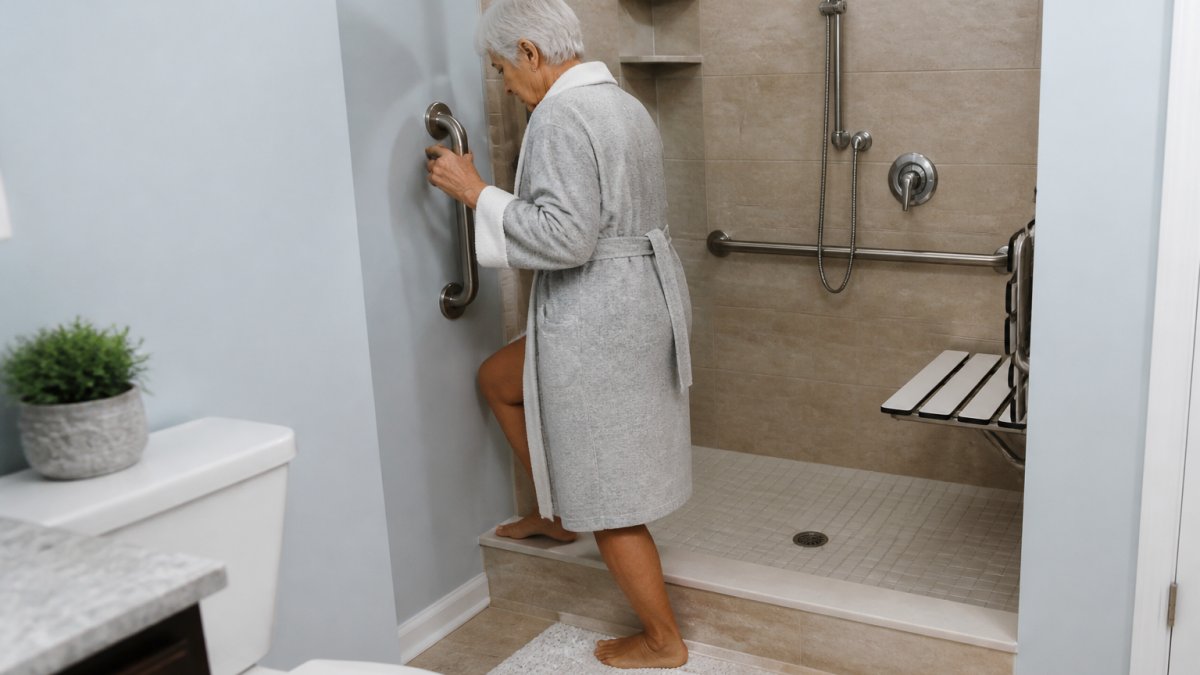
Grab bars are one of the most effective modifications. Install them in bathrooms near the toilet, shower, and tub, rated for at least 250 pounds and mounted securely into wall studs. Bedroom grab bars near the bed help with transfers, a sequence where many falls occur.
If your parent struggles with stairs, a stair lift allows safe movement between floors. If stairs aren’t essential, rearranging spaces to keep your parent on one level reduces fall risk significantly.
A walk-in shower with a low threshold eliminates step-over hazards. A shower chair reduces balance challenges, and a handheld showerhead makes rinsing easier.
Smooth, slippery floors increase fall risk. Non-slip rugs and mats help, but textured tiles or rubber flooring provide better permanent traction.
A bed rail helps with transfers. An adjustable bed reduces effort to sit up and stand. Keep a phone, water, and light switch within arm’s reach.
Grab bars installed incorrectly can fail when needed most. Never mount them into drywall alone, they must anchor into wall studs. If you’re unsure about installation, hire a professional. A failed grab bar during a critical moment can cause the very fall you’re trying to prevent.
Balance Exercises for Seniors to Reduce Fall Risk
Targeted exercises can slow balance decline and even improve it significantly. Exercises should be gentle enough to start but challenging enough to build strength.
Have your parent stand with feet shoulder-width apart, holding a sturdy chair, and lift one foot slightly off the ground for a few seconds. Repeat on the other side, 10 repetitions per leg, several times per week. Gradually reduce hand support as balance improves.
Heel-to-toe walking strengthens balance and coordination. Your parent walks in a straight line, placing the heel of one foot directly in front of the toes of the other. Start with 20 steps, rest, and repeat 3-4 times per week.
Sit-to-stand exercises build leg strength critical for preventing falls. Your parent sits in a sturdy chair, stands up with minimal hand support, and sits back down, 10-15 repetitions. This strengthens the quadriceps and glutes.
Calf raises improve ankle stability. Standing behind a chair for support, your parent rises up on their toes, holds for a second, and lowers back down. Repeat 15-20 times. This simple exercise strengthens the calf muscles, which stabilize the ankle during walking.
Tai chi is particularly effective for fall prevention. This ancient practice combines slow, deliberate movements with balance challenges. Studies show that regular tai chi practice reduces fall risk by improving balance, strength, and body awareness. Many community centers in Northern New Jersey offer tai chi classes specifically for seniors. (Source: National Institute on Aging (NIA))
The most effective exercise program is one your parent will actually do. Start with exercises that feel manageable, celebrate small improvements, and gradually increase difficulty as confidence builds. Consistency matters far more than intensity.
Fall Prevention Tips for Caregivers
If you’re caring for a senior parent, your role in fall prevention is crucial. Caregivers often spot hazards and behavioral patterns that the senior themselves might miss. Your awareness and proactive approach can prevent falls before they happen.
First, understand your parent’s specific fall risks. Does balance decline when tired? Are certain times of day more dangerous? Does medication affect coordination? Ask their doctor about these patterns. Some medications increase dizziness or drowsiness, timing doses to minimize these effects during high-activity periods helps.
When assisting with movement, use proper techniques. Stand on the weaker side if your parent has asymmetrical strength or balance. Use a gait belt, a specialized belt with handles, to provide support during transfers without straining your back. Never let your parent rush.
Encourage your parent to wear appropriate footwear. Slippers without grip increase fall risk. Shoes with non-slip soles and good ankle support are ideal. Avoid loose clothing that might catch on furniture or stairs.
Communication is essential. Ask your parent to tell you before they move. “I’m going to stand up now” gives you time to be ready. Never assume your parent will call for help if they feel unstable, some seniors resist asking for assistance due to pride or fear of burdening family.
Watch for warning signs that your parent might be about to fall. Sudden dizziness, loss of balance, or grabbing for support are clear signals. If your parent does fall, don’t panic. Call for medical evaluation even if they seem fine, internal injuries aren’t always obvious.
Keep a fall log. Note the date, time, location, what your parent was doing, and any injuries. Over time, patterns emerge, certain times of day, specific locations, or particular activities might show higher risk. This information helps you and their doctor develop targeted prevention strategies.
Medication Review and Vision Checks
Many seniors take multiple medications, and some significantly increase fall risk. A medication review with your parent’s doctor can identify problematic drugs and adjust dosages or timing to minimize fall risk.
Certain medications are known to increase fall risk. Blood pressure medications can cause dizziness, especially when standing up quickly. Pain medications affect balance and coordination. Sleep aids impair alertness and reaction time. Anti-anxiety medications reduce balance control.
Orthostatic hypotension, a sudden drop in blood pressure when standing, is a common cause of falls. Some medications worsen this condition. If your parent feels dizzy when standing, mention it to their doctor. Simple interventions like standing more slowly or increasing fluid intake can help.
Vision changes dramatically affect fall risk. Poor vision makes it harder to spot hazards, judge distances, and navigate stairs safely. Ensure your parent has regular eye exams, at least annually, more often if they have conditions like glaucoma or macular degeneration (Eye Health Information for Adults Over 65).
Cataracts, a common age-related condition, reduce contrast sensitivity and increase glare sensitivity. Your parent might see fine in bright conditions but struggle in dim lighting. This explains why falls often happen in hallways or bathrooms at night. Cataract surgery, when appropriate, can dramatically improve safety.
Bifocals and progressive lenses can increase fall risk on stairs. These glasses create a transition zone where vision shifts abruptly. When looking down at stairs, your parent might be looking through the distance-correction portion of the lens, making stairs appear blurry.
When to Seek Professional In-Home Support
Some fall risks require professional intervention. Recognizing when to bring in trained caregivers can prevent serious injuries and provide peace of mind for your entire family.
If your parent has had a fall, a physical therapist can evaluate balance, strength, and gait to identify deficits and recommend targeted exercises and modifications. Many insurance plans cover physical therapy when recommended by a doctor.
When your parent has multiple risk factors, previous falls, balance problems, vision issues, and medication interactions, professional in-home support becomes valuable. Trained caregivers recognize hazards, assist with safe movement, and respond appropriately if a fall occurs.
Live Easy Home Care’s ACHC-accredited caregivers specialize in fall prevention for seniors with complex needs. Our caregivers are trained in proper transfer techniques and recognizing warning signs of immediate risk.
For seniors living alone, professional in-home support provides crucial safety monitoring during high-risk times like morning routines and bathroom visits. For families managing care from a distance, knowing a trained professional is present offers peace of mind.
Veterans may qualify for VA benefits that help cover in-home care costs. Live Easy Home Care works with veterans and their families to navigate these benefits. If your parent is a veteran, ask about eligibility during your initial consultation.
Consider professional support if:
- Your parent has had multiple falls
- Balance or mobility has declined noticeably
- Your parent lives alone
- You’re unable to provide daily assistance
- Your parent has cognitive decline that affects safety judgment
- Your parent is recovering from surgery or injury
Conclusion
Fall prevention isn’t a single action, it’s a comprehensive approach combining home safety, physical fitness, medication management, and professional support when needed. The 7 ways to prevent falls for seniors at home covered here form a practical framework for keeping your parent safe while preserving independence.
If your parent is struggling with balance, has had a fall, or you’re concerned about their safety, professional support makes a real difference. Live Easy Home Care provides ACHC-accredited caregivers trained in fall prevention, mobility assistance, and emergency response across Northern New Jersey. Our team specializes in personalized care plans that address your parent’s specific risks, whether that’s dementia care, post-surgery recovery, or daily living assistance. [Book Now] to discuss how we can help your family maintain safety and dignity at home.
Frequently Asked Questions
What are the most common fall hazards in a senior’s home?
Loose rugs, cluttered pathways, poor lighting, slippery bathroom floors, and inadequate handrails cause most falls. Stairs without railings, worn carpet edges, and obstacles like cords or furniture also pose significant risks. A thorough home safety checklist for seniors should address each room, paying special attention to bathrooms and staircases where falls happen most frequently.
How can balance exercises for seniors reduce fall risk?
Balance exercises strengthen leg muscles and improve proprioception, your body’s sense of position in space. Simple activities like standing on one foot, heel-to-toe walking, and tai chi improve stability and reaction time. Research shows seniors who practice balance exercises regularly have fewer falls and greater confidence moving around their homes. Even 10-15 minutes daily can make a meaningful difference.
What should I do if my aging parent refuses help or is stubborn about accepting care?
Professional caregivers trained in dementia and behavioral support understand how to build trust gradually. They focus on maintaining dignity while gently encouraging safe habits like eating properly. Patience, consistency, and respect for your parent’s independence are key. A caregiver who listens and explains the ‘why’ behind recommendations often succeeds where family members face resistance.
Are there VA benefits available to help pay for in-home care for veteran parents?
Veterans may qualify for Aid & Attendance benefits through the Department of Veterans Affairs, which can help offset in-home care costs. Eligibility depends on service history, disability rating, and income. Contact your local VA office or visit VA.gov to explore your options. A professional home care agency can also help guide you through the application process.