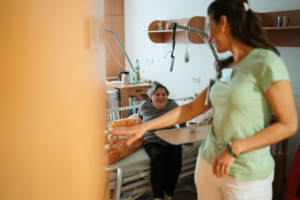

When considering continuous senior care at home, families often encounter two main options: live-in care and 24-hour care. While both provide full-time support, their structures and benefits differ significantly. Understanding these distinctions helps families make the best choice, especially in areas like Bergen County, where quality options are abundant. Deciding which model offers the optimal balance of consistency, supervision, and cost for a loved one is essential for planning long-term support.
The Structure of Live-In Care
Live-in care involves a single, dedicated caregiver residing in the senior’s home. This arrangement provides a constant, comforting presence. The caregiver assists with all daily activities, including personal hygiene, meal preparation, mobility, and medication reminders. While the caregiver is present around the clock, they require an uninterrupted block of time (typically eight hours) for sleep. They remain available for urgent needs during this rest time, but are not actively awake and monitoring. For seniors who are largely safe overnight but need assurance, or for those whose needs are predictable, live-in care offers an exceptional blend of affordability and consistency. This model builds a strong, familiar relationship, which can be invaluable for emotional well-being.
The Supervision of 24-Hour Care
24-hour care operates differently by utilizing a team of two or three caregivers who work in rotating shifts (usually 8 to 12 hours each). Because shifts change frequently, there is always an awake, alert, and active professional monitoring the senior. This is the preferred choice when safety risks are high—for example, if a senior is prone to wandering due to in-home memory care needs, or has a condition requiring frequent nighttime intervention. While this model is more expensive due to the constant, active supervision, it provides the maximum possible safety assurance. Families seeking this level of support find that 24-hour in-home care is a critical tool for risk management.
Consistency vs. Active Monitoring
The primary difference boils down to consistency versus vigilance. Having one or two dedicated individuals who know the senior’s habits and preferences intimately fosters a deeper sense of security. This consistency makes it easier for the caregiver to spot subtle changes in health, often catching issues early.
Conversely, 24-hour care prioritizes maximum safety monitoring. If a senior’s safety needs are high, such as frequent transfers, serious fall risks, or advanced dementia care requirements, the non-stop vigilance of shift-based care eliminates the risk associated with a caregiver being asleep.

Making the Decision with Live Easy Home Care
Live Easy Home Care understands that this is a significant decision. We help families evaluate their needs, providing honest, professional guidance to choose between live-in care and 24-hour home care in Bergen County. Our commitment is to deliver the highest quality home care aid in Bergen County so your loved one receives reliable, compassionate support.
Book an appointment with us today to discuss your family’s needs and find a plan that guarantees comfort and stability at home.