Table of Contents
- How to Prevent Elderly Falls at Home: What Actually Works
- Start With a Fall Risk Assessment for Older Adults
- The Home Safety Checklist for Seniors: Room by Room
- Bathroom Safety for Seniors: The Highest-Risk Room
- Caregiver Tips for Preventing Falls Every Day
- When to Bring In Professional Help
- Conclusion: Small Changes, Fewer Falls
- Frequently Asked Questions
Last Updated: October 9, 2026
How to Prevent Elderly Falls at Home: What Actually Works
According to the CDC falls prevention data, falls are the leading cause of injury for adults 65 and older, and most happen at home. Learning how to prevent elderly falls at home starts with one honest walkthrough of the house, room by room. At Live Easy Home Care, we build fall prevention into every care plan we write for families across Northern New Jersey. Below, we break down the assessment, the room-by-room fixes, and the daily habits that keep seniors steady.
Falls rarely come from one big hazard. They come from small ones stacking up.
A loose rug near a dark hallway. A missed medication dose. A grab bar that was never installed. Fix the stack, and you cut the risk.
Most falls are preventable. The biggest wins come from three changes: better lighting, secure bathroom fixtures, and a caregiver who knows the daily routine.
Start With a Fall Risk Assessment for Older Adults
A fall risk assessment for older adults is a structured review of a senior’s health, medications, mobility, and home layout to find what raises their chance of falling. Doctors, physical therapists, and home care teams all use some version of it. The CDC STEADI fall prevention framework is the tool many U.S. clinicians rely on.
A good assessment looks at:
- Balance and walking speed
- Current medications and side effects
- Vision and hearing
- Footwear and foot health
- Past falls, even minor ones
What a Home Fall Risk Assessment Covers
A home fall risk assessment covers the physical space, not just the person. A nurse or caregiver walks every room and notes hazards: loose rugs, poor lighting, cluttered paths, and missing grab bars. Families are often surprised by how many trip points sit in plain sight.
The assessment should also flag daily habits. Does your parent rush to the bathroom at night? Skip meals? Forget their blood pressure pill? Each one raises fall risk.
The Home Safety Checklist for Seniors: Room by Room
A home safety checklist for seniors works best when you go room by room instead of trying to fix everything at once. Start with the spaces your parent uses most, then work outward.
| Room | Common Hazard | Fix |
|---|---|---|
| Living room | Loose rugs, low chairs | Add grip tape, raise seat height |
| Bedroom | Dark path to bathroom | Night lights, clear floor |
| Hallway | Clutter, poor lighting | Remove items, add motion lights |
| Stairs | Loose rails, worn treads | Tighten rails, add contrast strips |
| Bathroom | Slippery tub, low toilet | Grab bars, non-slip mat, raised seat |
| Entryway | Uneven steps, wet floors | Handrail, absorbent mat |
Living Areas, Bedrooms, and Hallways
Clear the floor first. Remove magazines, cords, and pet toys from walking paths. Tape down or remove loose rugs. Add night lights along the route from bed to bathroom.
Chairs matter too. A seat that’s too low makes standing up hard. Aim for a chair with arms and a firm cushion.
Stairs, Entryways, and Outdoor Paths
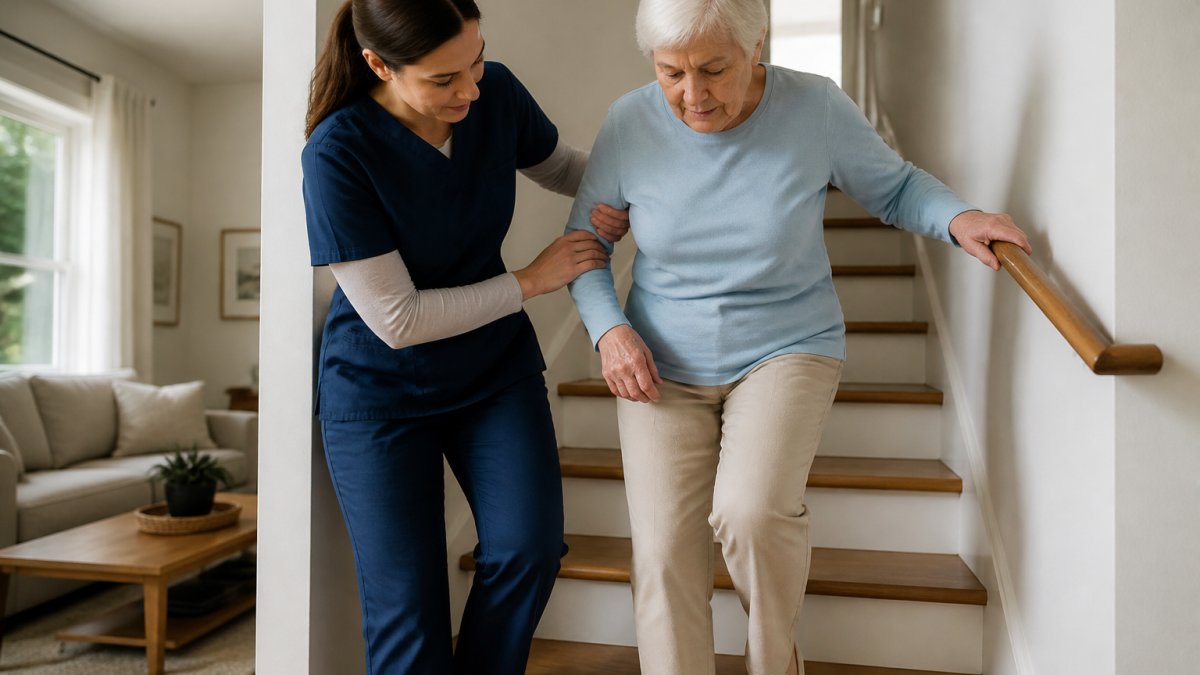
Stairs are where small problems become serious ones. Check that handrails are tight on both sides. Add contrast strips to the edge of each step so your parent can see them. Outside, repair cracked walkways and keep paths clear of leaves and ice.
Bathroom Safety for Seniors: The Highest-Risk Room
Bathroom safety for seniors deserves extra attention because bathrooms combine water, hard surfaces, and tight spaces. Most falls in the home happen here. (Source: CDC’s STEADI (Stopping Elderly Accidents, Deaths, and Injuries) program)
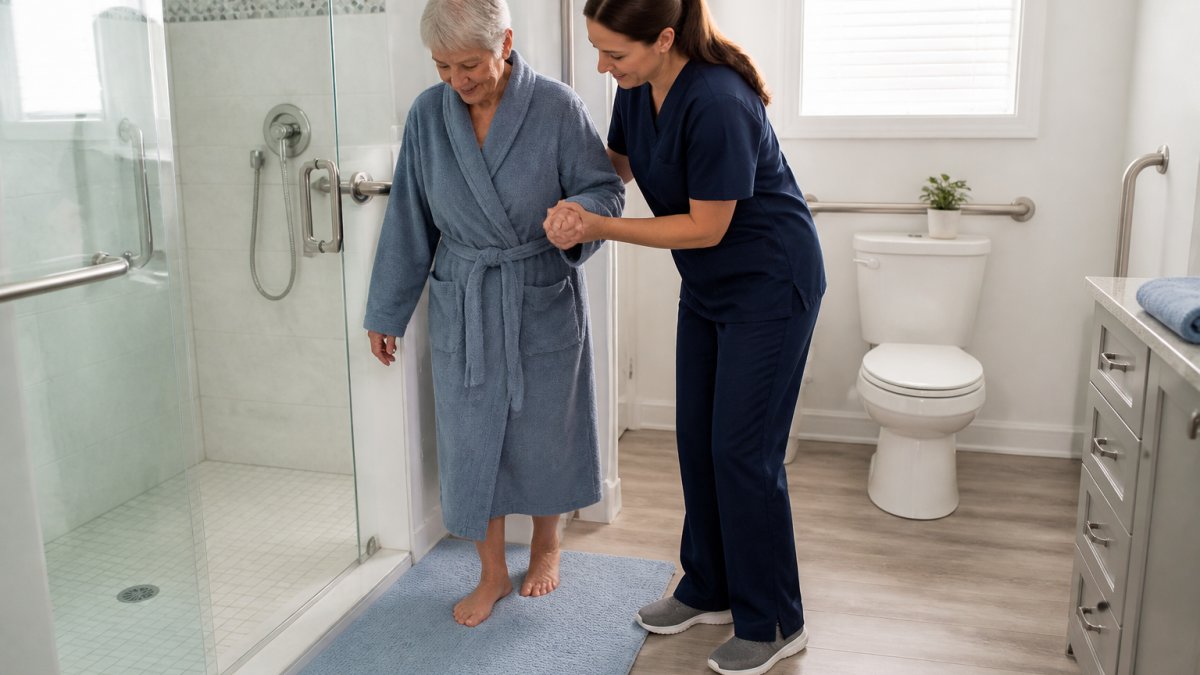
Start with three upgrades:
- Install grab bars beside the toilet and inside the shower
- Use a non-slip mat inside and outside the tub
- Add a raised toilet seat if standing up is hard
A shower chair makes a real difference. So does handheld showerhead, which lets your parent sit while washing. Keep towels and toiletries within reach so no one has to stretch or twist.
Never use a towel rack or soap dish as a grab bar. They are not built to hold body weight and can pull out of the wall mid-fall.
Caregiver Tips for Preventing Falls Every Day
Caregiver tips for preventing falls come down to consistency. A safe home only helps if daily habits support it.
- Walk with your parent, not ahead of them
- Keep their phone or alert button within reach
- Check that they take medications on schedule
- Serve water with meals to prevent dizziness from dehydration
- Encourage sturdy, closed-back shoes indoors
Watch for changes. New weakness, confusion, or shuffling steps often signal a rising risk. Report these to their doctor.
Ask your parent’s doctor or pharmacist to review all medications at least once a year. Some common prescriptions cause drowsiness or dizziness, and a simple timing change can lower fall risk.
When to Bring In Professional Help
Professional help makes sense when daily tasks become risky or when family can’t be there around the clock. Signs it’s time include repeated near-falls, trouble getting out of a chair, or confusion about medications.
In-home caregivers can handle the daily pieces that prevent falls: helping with bathing and dressing, monitoring medications, preparing meals, and watching for changes in strength or balance. For families across Bergen and Morris County, Live Easy Home Care provides ACHC-accredited caregivers trained in injury and fall prevention, from hourly visits to 24/7 live-in care.
If you’re searching for “fall prevention help near me,” start with a conversation about your parent’s daily routine. The right plan fits their needs, not a template.
Conclusion: Small Changes, Fewer Falls
Preventing falls at home isn’t about one dramatic fix. It’s about stacking small, steady changes: better lighting, secure bathrooms, and a caregiver who knows your parent’s routine. If you’re worried about a loved one’s safety, our team at Live Easy Home Care can help. We offer personalized care plans, professional health monitoring, and specialized dementia and Alzheimer’s care across Northern New Jersey. Book Now
Frequently Asked Questions
How can I prevent an elderly person from falling at home?
Start with a room-by-room safety review. Remove loose rugs, add grab bars in the bathroom, improve lighting in hallways and stairwells, and keep frequently used items within easy reach. Encourage your parent to wear supportive, non-slip footwear indoors and to stand up slowly from chairs and beds. A physical therapist can recommend exercises that improve balance and leg strength. If you live in Northern New Jersey, an in-home care provider can complete a professional fall risk assessment and build a prevention plan around your parent’s specific needs.
What home modifications help prevent falls in seniors?
The most effective changes are simple and inexpensive. Install grab bars in the shower, tub, and beside the toilet. Add a non-slip mat and a shower chair to the bathroom. Secure or remove loose rugs, and tape down cords that cross walkways. Put night lights in hallways and near the bed, and add a lamp within reach of the bed. In stairways, install handrails on both sides and make sure steps are well lit. A home safety checklist for seniors can help you work through each room systematically rather than guessing what to fix.
When should an older adult talk to a doctor about falls?
Any fall, even one without injury, is worth mentioning to a doctor. A single fall can signal problems with balance, vision, blood pressure, or medication side effects. Bring a list of all current medications, including over-the-counter drugs and supplements, since some combinations cause dizziness or drowsiness. The doctor may refer your parent to a physical therapist for strength and balance training or to a specialist for further evaluation. If your parent has fallen more than once in six months, that conversation should happen promptly.
What should caregivers do to reduce fall risk at home?
Caregivers can make a real difference by keeping walkways clear, wiping up spills immediately, and making sure glasses, hearing aids, and mobility aids are within reach at all times. Watch for changes in how your parent walks, stands, or gets out of a chair, and note them for the doctor. Encourage regular movement rather than long periods of sitting, since inactivity weakens the muscles that support balance. If you need extra support, a professional caregiver trained in fall prevention can provide daily oversight and health monitoring.