

Table of Contents
- What In-Home Care for Dementia Patients in NJ Actually Includes
- How to Find and Vet an In-Home Dementia Caregiver
- Managing Dementia Behaviors at Home Without Losing Your Patience
- Why Dementia Caregiver Training Changes Everything
- What In-Home Dementia Care Costs and How Families Pay for It
- Bergen County Caregiver Support Services for Families
- When It’s Time to Call a Professional Dementia Care Agency
- Frequently Asked Questions
Last Updated: October 19, 2026
What In-Home Care for Dementia Patients in NJ Actually Includes
Dementia care NJ brings trained caregivers into the family home to handle daily routines, safety, and health monitoring. At Live Easy Home Care, we serve families across Englewood and Northern New Jersey with ACHC-accredited caregivers. The work is more specialized than standard senior care.
Dementia changes how a person thinks, remembers, and manages daily tasks. A caregiver trained for dementia plans around that.
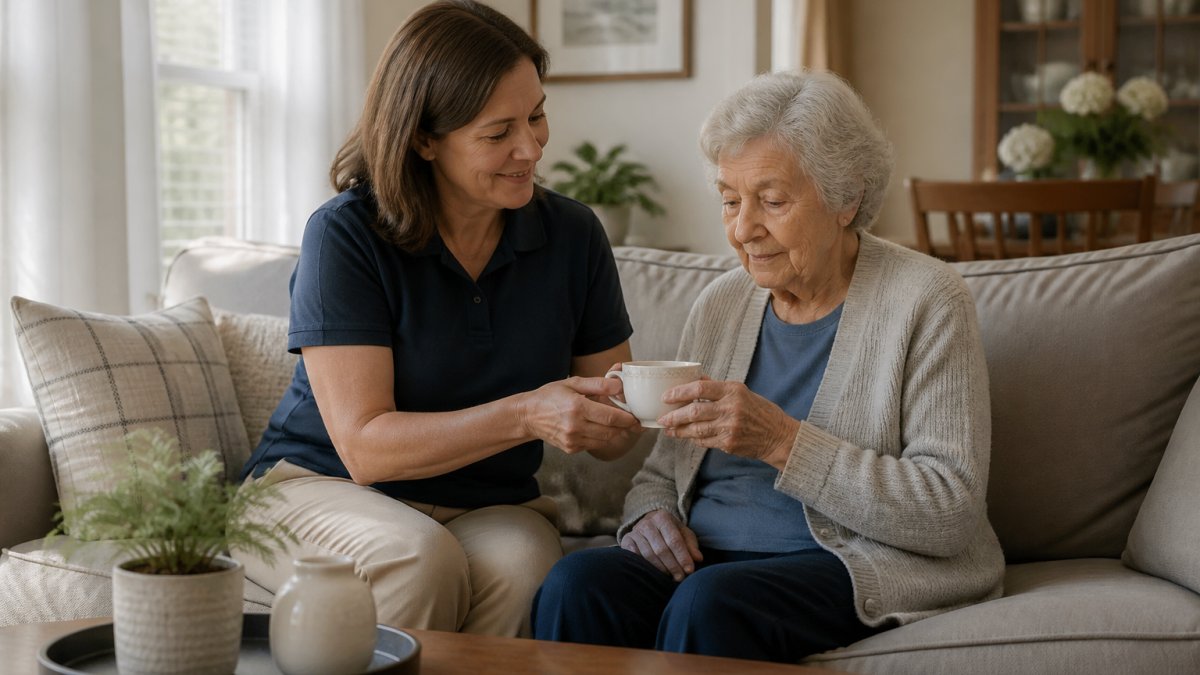
Personal Care, Supervision, and Health Monitoring
Personal care covers bathing, dressing, grooming, and meals. Supervision means staying alert to wandering, confusion, and fall risk. Health monitoring tracks medication schedules, appetite, sleep, and changes in behavior.
Many families find that a steady routine lowers agitation. A common approach is to keep meals, bathing, and bedtime at the same time each day.
Hourly, Live-In, and 24-Hour Dementia Care at Home NJ
Families choose among three main schedules:
- Hourly care: a caregiver visits for a set block of hours each day or week.
- Live-in care: a caregiver lives in the home and covers daytime needs with overnight breaks.
- 24-hour care: caregivers rotate around the clock for people who cannot be left alone.
Advanced dementia often calls for 24-hour dementia care at home NJ families can rely on. Safety comes first when someone may wander or forget where they are.
Ask how the agency handles overnight hours. Some “live-in” schedules include sleep breaks, while 24-hour care means someone is always awake and watching.
How to Find and Vet an In-Home Dementia Caregiver
Start by confirming the agency’s credentials, then ask how it trains caregivers for dementia specifically. A good agency welcomes hard questions. A vague answer is a warning sign.
Use this checklist before you sign:
- Confirm the agency’s accreditation and state licensure
- Ask how many hours of dementia-specific training caregivers complete
- Request a written care plan before care begins
- Ask how the agency handles a caregiver calling out sick
- Confirm who to call at 2 a.m. during an emergency
- Ask whether caregivers receive background checks
- Meet the assigned caregiver before the first shift
- Get the backup caregiver plan in writing
A common mistake is choosing on price alone. The cheaper option often means less training and thinner backup coverage.
Managing Dementia Behaviors at Home Without Losing Your Patience
Managing dementia behaviors at home starts with understanding that the behavior is communication. Agitation, repetition, and sundowning usually signal fear, pain, or overstimulation, not stubbornness.
Try these approaches first:
- Keep the home calm and dim in the late afternoon
- Respond to the feeling, not the facts
- Redirect rather than argue
- Keep a simple daily routine
- Check for pain, hunger, or a full bladder
When your parent says something that isn’t true, correcting them rarely helps. Join their reality and guide them gently toward the next activity. Patience is easier when you understand the cause.
Never argue with a person who has dementia about who is right. Arguing raises agitation and can escalate to aggression. Redirect instead.
Why Dementia Caregiver Training Changes Everything
Dementia caregiver training is the difference between a sitter and a specialist. A trained caregiver recognizes sundowning, prevents wandering, and knows when confusion signals a medical problem rather than the disease itself.
The thing nobody tells you about dementia care is how much of it is prevention. A trained caregiver clears trip hazards, locks away medications, and watches for dehydration before it becomes a crisis. Fall prevention matters even more after a hip surgery or a prior fall.
At Live Easy Home Care, our caregivers train in dementia and Alzheimer’s care plus injury and fall prevention. That focus on safety is what families tell us they notice first.
What In-Home Dementia Care Costs and How Families Pay for It
Pricing depends on the schedule, the level of care, and the hours you need. We do not publish flat rates because every care plan is different. Call us for a current quote based on your parent’s needs.
Families usually pay through a mix of sources:
- Private savings and family contributions
- Long-term care insurance, if a policy exists
- Veterans benefits, for eligible veterans and surviving spouses
- Medicaid programs, depending on eligibility
If your parent is a veteran, ask about VA benefits early. Eligibility rules and amounts change, so check the official U.S. Department of Veterans Affairs benefits page for current details.
For state programs, review the New Jersey Division of Aging Services for home and community-based options.
Bergen County Caregiver Support Services for Families
Bergen County caregiver support services give families breathing room. Respite care, support groups, and counseling help adult children who are carrying most of the load.
You cannot care well if you are running on empty. A few hours of respite each week can reset your patience and protect your own health.
Local resources to explore:
- County aging services for respite and counseling referrals
- Alzheimer’s support groups, in person and online
- Adult day programs for structured daytime activity
- The Alzheimer’s Association for caregiver education and a 24/7 helpline
Respite is not a luxury. It is what keeps family caregivers healthy enough to keep going.
When It’s Time to Call a Professional Dementia Care Agency
Call a professional agency when safety, exhaustion, or escalating behaviors outpace what the family can manage. Warning signs include wandering, missed medications, a recent fall, or a caregiver who cannot sleep.
There is no shame in that call. Dementia care is a skill, and families deserve backup.
If you are searching for dementia care NJ families trust in Englewood or across Bergen and Morris County, Live Easy Home Care offers hourly, live-in, and 24/7 care with ACHC-accredited caregivers. We build a personalized care plan and match your parent with a trained caregiver.
Frequently Asked Questions
What does in-home dementia care include?
In-home dementia care covers personal care like bathing and dressing, meal preparation, medication reminders, and supervision to prevent wandering or falls. It also includes structured routines and gentle redirection for confusion or agitation. Many agencies add health monitoring, mobility support, and respite for family caregivers. The exact mix depends on the person’s stage of dementia and how much the family can handle. A care plan built after an in-home assessment usually spells out daily tasks, safety measures, and how caregivers respond to specific behaviors.
How much does in-home dementia care cost in New Jersey?
Pricing depends on the level of care, hours per week, and whether you choose hourly, live-in, or 24-hour coverage. Live-in and 24-hour dementia care at home NJ families request costs more than hourly visits because it involves round-the-clock staffing. Agencies set their own rates, so ask for a written quote that lists hourly, overnight, and holiday rates plus any assessment or registration fees. For veterans, VA benefits may offset some costs. Contact the agency directly for current pricing and a personalized estimate.
Can someone with advanced dementia stay at home?
Many people with advanced dementia remain at home with the right support, though safety needs rise. Wandering, fall risk, swallowing difficulties, and around-the-clock supervision usually mean 24-hour or live-in care rather than hourly visits. A home safety assessment, medical guidance from the person’s doctor, and a caregiver trained in dementia care make aging in place more realistic. Families should reassess regularly, because needs change. When home care can no longer keep the person safe, memory care or skilled nursing may become the better option.
What should I look for in a dementia caregiver?
Look for formal dementia caregiver training, not just general home care experience. Ask how the agency trains staff on confusion, agitation, sundowning, and wandering, and how it handles a caregiver who quits without notice. Verify licensure and accreditation, ask about background checks, and request continuity-of-care details. A good caregiver builds trust slowly, follows a consistent routine, and communicates with family. Also confirm the agency carries liability insurance and has a clear plan for overnight emergencies.
Dementia care at home asks a lot of a family, and the hardest part is knowing when to bring in help. Live Easy Home Care supports Northern New Jersey families with ACHC-accredited caregivers, specialized dementia and Alzheimer’s care, 24/7 live-in options, personalized care plans, and a focus on fall prevention and health monitoring. Get started with Live Easy Home Care and give your parent dignified care at home, with peace of mind for you.