

Table of Contents
- VA Benefits for In-Home Care: What You Need to Know
- VA Aid and Attendance Eligibility: Who Qualifies
- Types of In-Home Care Covered by VA Benefits
- How to Apply for VA Home Health Care: Step-by-Step
- Veteran Caregiver Support Program in NJ: What Families Should Know
- Finding VA-Approved In-Home Care Providers in Northern New Jersey
- Common Concerns About VA In-Home Care
- Conclusion: Next Steps for Your Family
- Frequently Asked Questions
Last Updated: October 7, 2026
VA Benefits for In-Home Care: What You Need to Know
VA benefits for in home care are the medical and pension programs the U.S. The two main paths are the Homemaker and Home Health Aide program and Aid and Attendance, a monthly pension supplement for veterans and surviving spouses who need regular help with daily activities.
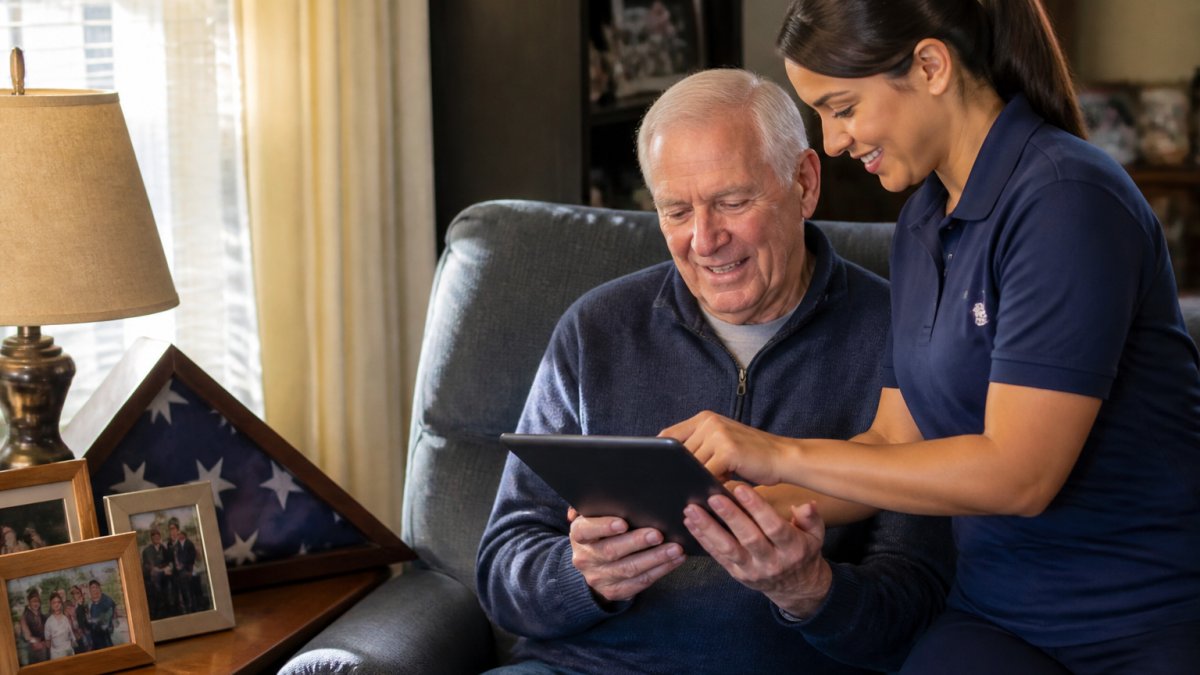
This guide from Live Easy Home Care covers who qualifies, what the programs pay for, and how to apply.
The short answer is that qualifying is more common than most families expect. The VA does not look at your assets the way Medicaid does, and a veteran who needs help with dressing, bathing, or medication management may already meet the clinical bar.
Most families assume they earn too much to qualify for VA in-home care. The VA uses a different test than Medicaid, and a physician’s statement about daily care needs often matters more than income.
VA Aid and Attendance Eligibility: Who Qualifies
A veteran qualifies for Aid and Attendance when they need another person’s help with everyday activities such as bathing, dressing, eating, or following a medication schedule. Three tests apply: wartime service, an other-than-dishonorable discharge, and a documented clinical need.
Wartime Service and Discharge Requirements
The veteran must have served at least 90 days of active duty, with at least one day during a recognized wartime period. The VA publishes the qualifying dates on its own site, and they are broader than many families realize. The discharge must be other than dishonorable, which covers most veterans who completed their service. Surviving spouses of wartime veterans may also qualify for the pension portion.
Medical and Financial Criteria
The clinical test is straightforward: a physician or the VA’s own examiner must confirm the veteran needs help with daily activities, is bedridden, or has severely limited vision. The financial test is a net worth limit rather than an income cap, and the VA counts income minus unreimbursed medical expenses.
Because the net worth limit and benefit rates change annually, we always tell families to confirm current figures through the VA Aid and Attendance pension information rather than relying on last year’s numbers.
Types of In-Home Care Covered by VA Benefits
VA in-home care splits into two categories: clinical care delivered through the Veterans Health Administration, and cash benefits paid through the pension system. Which one you pursue depends on whether the veteran is enrolled in VA health care and whether the need is medical or personal.
| Program | What It Covers | Who Administers It | Best For |
|---|---|---|---|
| Homemaker and Home Health Aide | Personal care, bathing, dressing, meal prep, medication reminders | VA medical center | Veterans enrolled in VA health care with a clinical need |
| Aid and Attendance | Monthly pension supplement the family uses to pay for care | VA pension system | Wartime veterans and surviving spouses needing daily help |
| Veteran-Directed Care | Budget the veteran manages to hire their own caregiver | VA medical center | Veterans who want to choose and direct their own aide |
Homemaker and Home Health Aide Program
This program sends a trained aide into the home to help with personal care, light housekeeping, meal preparation, and medication reminders. It is ordered through the veteran’s VA primary care team, not through the pension office, so the starting point is a conversation with the VA medical center that manages the veteran’s care. Availability depends on the local VA’s capacity.
Aid and Attendance and Other Pension Benefits
Aid and Attendance is a monthly payment added to the VA pension. The family receives the money and decides how to spend it on care, which makes it the most flexible option. The related Housebound benefit applies to veterans who are largely confined to their home. Rates are set by Congress and updated each year.
Apply for Aid and Attendance before you assume you will not qualify. The VA counts unreimbursed medical expenses against income, and in-home care costs often push a family under the threshold.
How to Apply for VA Home Health Care: Step-by-Step
Applying for VA home health care starts with deciding which benefit you are pursuing, because the two paths have different forms and different offices. Clinical care goes through the VA medical center; the pension benefit goes through the pension office.
- Confirm the veteran’s discharge status. Request a copy of the DD-214 if it is not on hand.
- Gather medical evidence. Ask the primary care physician for a statement describing which daily activities the veteran cannot perform alone.
- Enroll in VA health care if not already enrolled, since the Homemaker and Home Health Aide program requires it.
- Submit VA Form 21P-534EZ for the pension benefit, or request a clinical assessment through the VA medical center for aide services.
- Track the claim. The VA provides a status tool, and a Veterans Service Officer can follow up on your behalf.
- Line up a provider now. Approval can take months, and families who wait until the decision arrives lose that time.
A local Veterans Service Officer or an accredited claims agent can review the application at no cost before it is filed, and we recommend that step for any claim involving a surviving spouse.
Veteran Caregiver Support Program in NJ: What Families Should Know
The veteran caregiver support program NJ families use most is the VA’s Program of Comprehensive Assistance for Family Caregivers, which pays a stipend to a family member who provides daily care for a post-9/11 veteran with a serious injury.
For families outside that specific program, New Jersey offers its own supports, including property tax relief for veterans and state-funded respite programs administered through county offices of aging. Bergen County’s aging services division can connect families with respite grants and caregiver training.
The practical distinction matters: the federal caregiver stipend is narrow and injury-based, while state and county programs are broader and need-based. Many families qualify for one and not the other, so it is worth checking both.
Finding VA-Approved In-Home Care Providers in Northern New Jersey
Finding a VA-approved in-home care provider in Northern New Jersey means checking two things: whether the agency contracts with the VA, and whether it can actually staff the hours you need. Not every home care agency participates in VA programs, and the ones that do may not have capacity in your town.
Ask each agency these questions before signing anything:
- Does the agency hold a current contract with the VA, or will the family pay privately and seek reimbursement through Aid and Attendance?
- How are caregivers screened, trained, and supervised?
- What is the backup plan when a scheduled caregiver calls out sick?
- Can the agency provide dementia-specific training, which matters for veterans with cognitive decline?
- Which licensing body accredits the agency, and can you see the documentation?
We hold ACHC accreditation, which means an outside body audits our care practices, training records, and client documentation on a regular cycle. For families comparing agencies near me, that accreditation is one of the few objective signals available before you sign.
Do not sign a long-term contract before confirming how the agency handles VA billing. Some families pay privately for months and later discover the agency never had a VA contract, so the reimbursement path they assumed existed was never open to them.
Common Concerns About VA In-Home Care
The most common concern families raise is timing. VA claims can take months to process, and dementia or a recent fall does not wait for a decision.
The second concern is continuity. Families who have been burned by an agency that lost a caregiver without notice want to know it will not happen again.
The third concern is cost. VA benefits for in home care offset part of the expense, but they rarely cover the full bill for 24/7 care, and families should plan for the gap. We walk families through the realistic monthly picture during the assessment rather than after they have committed.
Conclusion: Next Steps for Your Family
Start with the DD-214 and a physician’s statement, because those two documents unlock every path that follows. Then decide whether you are pursuing clinical aide services, the Aid and Attendance pension, or both, and begin the application while you arrange care.
At Live Easy Home Care, we provide ACHC-accredited in-home support across Northern New Jersey, including specialized dementia and Alzheimer’s care, 24/7 live-in coverage, and personalized care plans built around each veteran’s needs. Our caregivers focus on fall prevention and daily health monitoring so families in Northern New Jersey can stop worrying about the gaps. Book Now to schedule an assessment and find out what your family qualifies for.
Frequently Asked Questions
Does the VA pay for in-home care for veterans?
Yes, the VA offers several programs that can help cover in-home care costs. The Homemaker and Home Health Aide program provides personal care services like bathing and dressing for eligible veterans. The Aid and Attendance benefit adds a monthly payment to a VA pension for those who need help with daily activities. Eligibility depends on service history, income, and medical need. Contact your local VA office or an accredited representative to see what you qualify for.
What is the VA Homemaker and Home Health Aide Care program?
This VA program sends trained homemakers or home health aides to your home to help with daily tasks such as bathing, dressing, meal preparation, and light housekeeping. It is designed for veterans who need personal care but do not require skilled nursing. The program is available through VA medical centers, and a VA doctor must authorize the care. Services are provided at no cost to eligible veterans.
How do I qualify for VA in-home care benefits in New Jersey?
To qualify, you generally need to be a veteran who served on active duty and was discharged under conditions other than dishonorable. For Aid and Attendance, you must need help with daily activities like bathing or dressing, or be bedridden. There are also income and asset limits. In New Jersey, contact the VA New Jersey Health Care System or a local veterans service officer to review your specific situation and start an application.
What is the difference between VA Aid and Attendance and standard home care benefits?
Aid and Attendance is a pension benefit that provides a monthly cash payment to eligible wartime veterans or their surviving spouses who need help with daily living. Standard home care benefits, like the Homemaker and Home Health Aide program, provide direct care services through the VA. Aid and Attendance can be used to pay for care from a provider of your choice, while the Homemaker program assigns VA-approved aides. Both require a medical need and service eligibility.
Can a family member be paid as a caregiver through the VA?
Yes, under the VA’s Program of Comprehensive Assistance for Family Caregivers, certain family members can receive a stipend for caring for a veteran. Eligibility is limited to veterans who incurred or aggravated a serious injury in the line of duty on or after September 11, 2001, though the program has expanded in recent years. The veteran must need personal care services. Apply through the VA’s Caregiver Support Program.
How long does it take to get approved for VA in-home care benefits?
Processing times vary. For the Homemaker and Home Health Aide program, approval can take several weeks after a VA doctor’s referral. Aid and Attendance claims often take several months to process because they require verification of service, income, and medical need. You can check the status of your claim online through the VA’s eBenefits portal or by contacting your regional VA office.
Can I use VA benefits to pay for a private in-home care agency in New Jersey?
Yes, if you receive Aid and Attendance or another VA pension benefit, you can use those funds to pay for a private agency like Live Easy Home Care. The VA does not restrict which provider you choose for Aid and Attendance. However, for the Homemaker and Home Health Aide program, care is arranged through the VA. Always confirm your benefits and coordinate with your VA representative before hiring a provider.
What if my parent is a veteran but has dementia?
Veterans with dementia may qualify for in-home care through VA programs. The Homemaker and Home Health Aide program can provide personal care, and Aid and Attendance can help cover costs. Additionally, the VA offers dementia-specific support through its Caregiver Support Program. A VA doctor will assess the level of care needed. For specialized dementia care at home, look for agencies with experience in memory care, such as those accredited by ACHC.