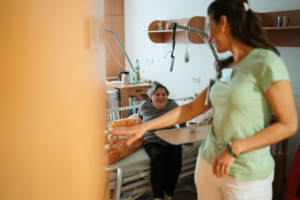

Families rarely arrive at the tipping point for professional senior care because of one visible or dramatic crisis. They reach it through steady erosion. Responsibilities expand slowly, expectations increase quietly, and emotional reserves thin out over time. Life continues to function on the surface, which makes it easy to ignore how fragile the arrangement has become underneath.
The tipping point appears when sustained effort no longer produces stability, predictability, or peace of mind.
Time Compression and the Loss of Personal Capacity
Caregiving reshapes time in ways families often underestimate. Days stop flowing naturally and instead break into short intervals of supervision, reminders, and monitoring. Personal schedules collapse as care giving tasks dictate when and how anything else can happen.
Families often notice:
- Days structured almost entirely around supervision, coordination, and prevention rather than work, rest, or relationships, leaving little room for recovery or reflection.
- Sleep repeatedly interrupted by checking behaviors, listening for movement, or persistent anxiety about safety during the night.
- Errands rushed or avoided altogether because leaving the home feels risky or irresponsible, even for short periods.
When care giving controls the clock, caregivers lose the mental space required to think clearly and plan effectively.

Emotional Drift and the Rise of Care Fatigue
Care fatigue rarely announces itself with emotional collapse. It develops gradually through subtle shifts in mood, patience, and emotional availability. Caregivers remain functional, but their emotional resilience steadily declines.
Common indicators include:
- Irritability that appears suddenly, followed by guilt or self-criticism for reacting sharply.
- Emotional detachment that develops as a coping mechanism rather than a lack of care or concern.
- A constant sense of tension or vigilance, even during moments when nothing appears wrong.
- A growing feeling of obligation replacing warmth, connection, or enjoyment.
These changes signal prolonged strain rather than diminished compassion.

When Hope Replaces Structure
A critical transition occurs when families begin relying on hope instead of systems. They hope meals get eaten, medications get taken, and safety risks remain controlled. Hope feels humane, but it does not replace consistency.
At this stage, families often rely on inexperienced caregivers in Bergen County, rotating informal helpers who lack training, continuity, and accountability. This inconsistency increases stress and risk rather than providing relief.
Defining the True Tipping Point
Families reach the tipping point when they cannot maintain safety, consistency, and emotional stability at the same time. When preserving one consistently undermines the others, the care model has reached its limit.
Burnout Signals Families Commonly Rationalize Away
Many caregivers equate endurance with commitment. They tolerate exhaustion, postpone personal needs, and normalize stress because they believe perseverance proves devotion. This mindset often delays meaningful change long after warning signs appear.
Burnout does not signal failure. It signals unsustainable conditions.
The Illusion of “Managing Fine”
Caregivers frequently insist they are coping, yet their daily behaviors reveal otherwise. Burnout emerges through gradual self-neglect rather than dramatic emotional breakdowns.
Families often observe:
- Personal medical appointments postponed repeatedly because caregiving always feels more urgent.
- Meals skipped or eaten irregularly due to constant interruptions and lack of planning time.
- Declining concentration, forgetfulness, or difficulty completing routine tasks.
- Persistent mental fatigue paired with irritability and emotional sensitivity.
These behaviors reflect overload, not weakness.

Conflict as a Predictor of Breakdown
Care arrangements often unravel through repeated friction rather than emergencies. Ongoing conflict drains emotional energy and erodes trust between caregivers and seniors.
Predictive patterns include:
- Daily resistance around hygiene, meals, or routines that once caused little difficulty.
- Negotiations replacing expectations, turning every task into a debate.
- Arguments escalating over minor issues due to emotional exhaustion.
- Caregivers feeling more like regulators than family members.
When conflict becomes routine, families need structured support.
Cognitive Exhaustion and Decision Saturation
Care giving requires constant decision-making. Every day involves planning, monitoring, adjusting, and anticipating needs. This mental burden erodes clarity faster than physical tasks.
As decision fatigue increases, families notice:
- Reduced focus and difficulty prioritizing tasks.
- Heightened anxiety over small or routine decisions.
- Emotional overreactions disproportionate to the situation.
- A sense of mental fog that never fully lifts.
Objective Benchmarks Families Often Ignore
Benchmarks may feel impersonal, but they protect dignity by prompting timely action.
Key indicators include:
- Repeated near-falls, balance instability, or increased fear of falling.
- Medication confusion, resistance, or inconsistent adherence to routines.
- Noticeable weight loss, dehydration, or declining appetite.
- Avoidance of hygiene or resistance to personal care tasks.
When these markers cluster, informal care systems struggle to cope.
When Professional Structure Becomes Essential
Professional home care does not replace family involvement. It stabilizes it. Structured support restores balance, predictability, and emotional clarity while allowing families to remain meaningfully involved.
Consistency as the Foundation of Stability
Families often provide dedication without consistency. Long-term outcomes depend on routines delivered reliably, day after day, regardless of circumstances.
This is where certified caregivers in Bergen County create measurable improvement. Training ensures routines remain consistent, expectations stay clear, and care delivery does not depend on guesswork or improvisation.

Dementia and Alzheimer’s Require Specialized Support
Cognitive decline alters perception, communication, and emotional regulation. Without training, families often misinterpret resistance as defiance rather than neurological change.
Professional dementia care and Alzheimer’s care rely on predictability, calm reinforcement, and dignity-centered routines that reduce anxiety and escalation.
Veteran-Specific Care Considerations
Veterans often respond best to structured environments that respect autonomy and routine. Home care for veterans in Fort lee, succeeds when caregivers understand discipline, boundaries, and long-term consistency.
Choosing Stability Without Guilt
Many families delay professional support because they associate it with failure. In reality, recognizing limits reflects foresight and responsibility.
Reframing the Decision to Seek Support
Professional home care strengthens family relationships by reducing friction and restoring emotional balance. When caregivers regain rest and clarity, connection improves.
Families often experience:
- Reduced daily conflict and emotional strain.
- Clearer communication and expectations.
- Lower anxiety for both caregivers and seniors.
- Improved long-term outcomes and stability.
Support transforms care giving from constant correction into meaningful presence.
What Families Should Prioritize in Long-Term Home Care
Effective long-term care partnerships emphasize ongoing relationships, consistent schedules, stable caregiver assignments, and adaptable planning that evolves with needs.
These elements protect dignity and prevent crisis-driven decisions.
Acting Before Crisis Preserves Well-Being
Recognizing the tipping point early prevents burnout and avoidable decline. Families who act proactively retain control and clarity rather than reacting under pressure.
Why Acting Early Preserves Dignity, Relationships, and Control
Families often wait longer than they should because the situation still feels “manageable.” Daily routines continue. Serious incidents have not yet occurred. From the outside, everything appears intact. Internally, however, caregivers operate in a constant state of vigilance, improvisation, and emotional strain. This gap between appearance and reality causes many families to delay decisions that would otherwise restore balance and stability.
Acting early does not mean surrendering responsibility. It means choosing structure before exhaustion dictates the outcome. Long-term home care works best when introduced as a stabilizing force rather than a last resort. When families plan ahead, they retain control over schedules, caregiver matching, and care design. They also protect relationships from becoming defined by tension, correction, or conflict.
Early planning allows senior care to evolve deliberately instead of re actively. Families can align routines, expectations, and communication before stress erodes trust. This approach proves especially critical when cognitive changes emerge. Introducing dementia care or Alzheimer’s care gradually helps seniors adapt to consistent routines and familiar caregivers, reducing confusion and resistance over time.
Proactive planning also supports continuity when care needs increase. Families who transition intentionally into 24-hour care or live-in care do so with clarity, not urgency. They avoid crisis-driven decisions that disrupt routines and heighten anxiety for everyone involved. The same principle applies to home care for veterans, where structure, predictability, and respect for independence matter deeply.
Finally, early action creates space for informed financial planning. Families who qualify for support through long-term care insurance benefit most when eligibility integrates into a long-term strategy rather than a rushed response. By acting before burnout deepens, families protect dignity, preserve emotional connection, and maintain agency over how care unfolds—now and in the years ahead.
A Thoughtful Path Forward
Live Easy Home Care provides long-term, in-home care for families in Bergen County seeking consistent, professional support. Our approach prioritizes ongoing care relationships, predictable routines, and committed caregivers across senior care, dementia care, Alzheimer’s care, 24-hour care, live-in care, and home care for veterans in Bergen County.
We accept clients who qualify through long-term care insurance, supporting eligibility while remaining focused on care delivery. Families ready to move from constant strain to sustainable support can book an appointment to build a plan grounded in dignity, stability, and long-term consistency.