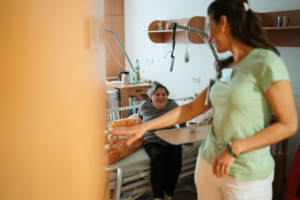

Deciding how to support an aging family member is one of the most significant emotional journeys a person can take. As parents or grandparents grow older, the conversation eventually turns toward the best environment for their health and happiness.
For many families, the primary debate centers on aging at home vs. assisted living. This choice is rarely just about medical needs. It is about dignity, comfort, and the preservation of a lifetime of memories.
While the options can feel overwhelming at first, understanding the nuances of home health care services and local facility-based care can help you navigate this transition with confidence and clarity.
The transition into the “golden years” should be a time of reflection and peace, yet the logistics of care often spark stress within the family unit. Often, the adult children are caught in the “sandwich generation,” balancing the needs of their own children with the increasing needs of their aging parents. Choosing between staying in a cherished family home or moving into a professional facility is a fork in the road that requires a deep dive into medical requirements, daily lifestyle preferences, and the long-term sustainability of the chosen path.
The Practical Differences: Routine and Environment
The most immediate difference between these two paths is the daily environment. Assisted living facilities offer a structured setting where meals, activities, and social interactions are built into the schedule.
For some, this community-driven lifestyle prevents the isolation that often comes with aging. Residents typically live in private or semi-private apartments but share common dining halls and recreation rooms.
This setup is designed for those who may no longer want to deal with the burdens of home maintenance, such as mowing the lawn, shoveling snow, or fixing a leaky faucet.
However, aging at home allows a senior to remain in a familiar space where every photo on the wall and every creak in the floorboard feels like home. This familiarity is not just about sentiment; it is a vital component of cognitive health. For seniors dealing with early-stage memory loss or mobility issues, knowing exactly where the bathroom is or how many steps are in the hallway provides a level of safety that a new, sterile environment cannot replicate.
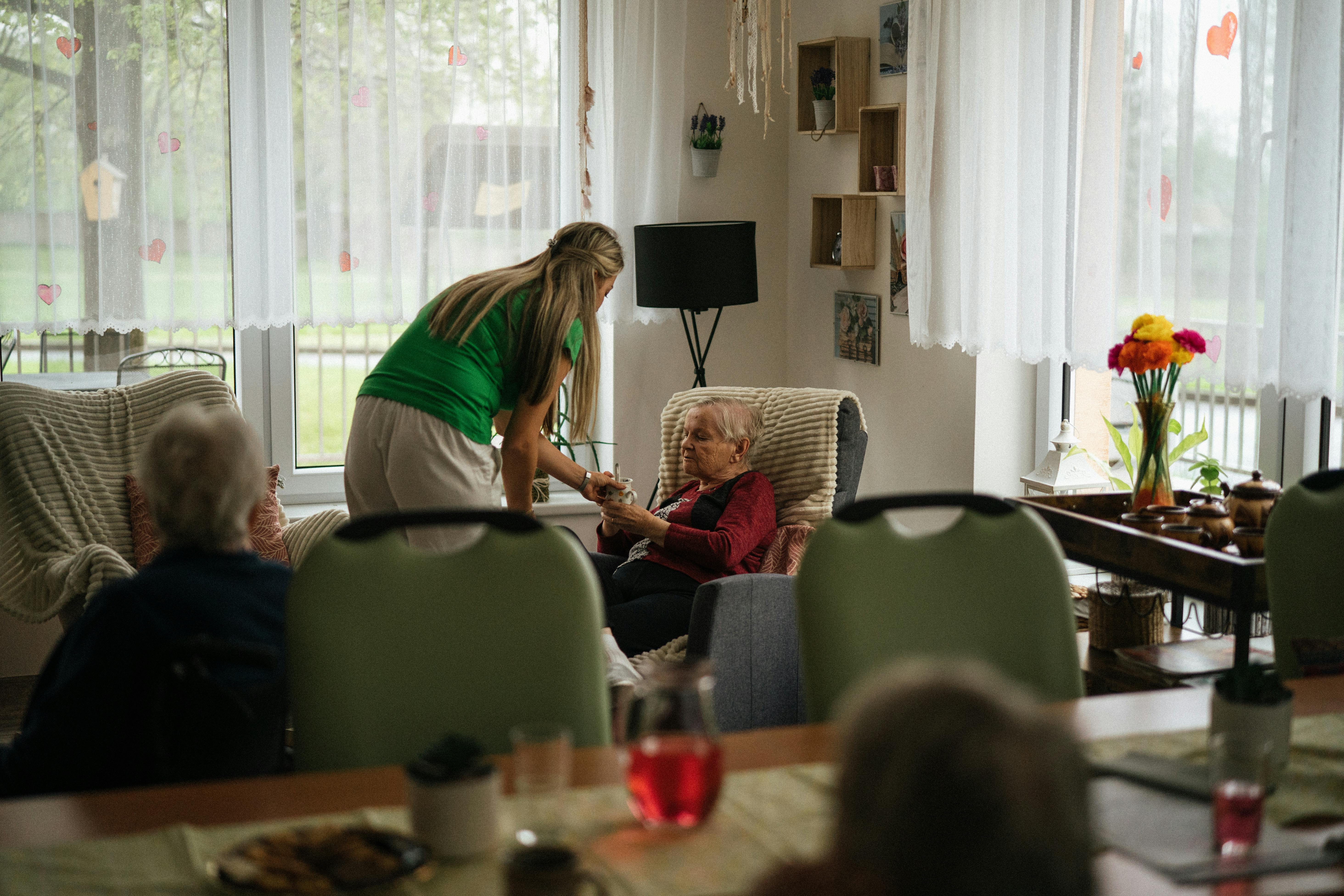
With the help of skilled caregivers, seniors can maintain their independence while receiving the exact level of support they require. This “one-on-one” attention ensures that the caregiver is focused entirely on one individual, rather than managing an entire floor of residents.
In a facility, staff members are often responsible for dozens of residents at once. This can lead to a “task-oriented” approach to care, making sure the medicine is taken and the meal is served. In-home care, conversely, is relationship-oriented.
The same person comes into the home, learns the senior’s likes and dislikes, knows how they take their tea, and understands their specific quirks. This bond is often what makes the difference between a senior “getting by” and a senior truly thriving.
Exploring Care Options for an Aging Loved One?
Choosing between aging at home and assisted living is an important decision. Understanding your loved one’s needs, preferences, and level of support can help your family make the right choice with confidence.
- Personalized care guidance
- Support for independent living
- Flexible care solutions
Emotional and Financial Considerations
Financially, assisted living usually involves a flat monthly fee that covers housing, utilities, and basic care. While this is predictable, it can be quite expensive, and many amenities may go unused. Many facilities also have “tiered” pricing, meaning that as a senior’s health declines, the monthly cost increases significantly. Families often find themselves paying for a suite of social activities that their loved one may not even participate in.
In contrast, in-home care is often more flexible. Families can scale services up or down based on their actual needs. You might start with four hours of help a day for light housekeeping and meal prep, and only increase those hours if medical needs change.
When evaluating aging at home vs. assisted living, many find that staying home is not only more emotionally grounding but also more cost-effective for those who do not yet require 24-hour institutional supervision. It allows for a customized approach where the senior remains the “boss” of their own domain.
The emotional weight of moving cannot be understated. “Relocation Stress Syndrome” is a real clinical term used to describe the anxiety, confusion, and physical symptoms that can occur when an older adult is moved from their home into a facility.
By staying at home, the senior avoids the grief of “downsizing” a lifetime of belongings into a one-bedroom apartment. They keep their neighbors, their local pharmacist, and the view from their favorite window.
Finding the Right Support in New Jersey
For those residing in the Garden State, local expertise is vital. The healthcare landscape in New Jersey is robust, but it requires a local touch to navigate effectively. Whether you are looking for specialized medical assistance or simply someone to help with daily chores, Bergen County long-term care support systems are designed to bridge the gap between complete independence and full-time facility care.
At Live Easy Home Care, we believe that the highest quality of life is achieved when seniors feel safe, respected, and heard in their own homes. We understand that every family has a unique story, and our mission is to provide the professional help necessary to keep those stories unfolding in the places where they began.
Our approach is holistic; we don’t just look at a checklist of physical needs. We look at the person. We consider their hobbies, their social needs, and their desire for autonomy.
In Bergen County, the options for seniors are vast, but the personal touch is what sets us apart. We serve as the eyes and ears for family members who may live out of state or have demanding work schedules. Knowing that a professional is checking in, preparing a nutritious meal, and ensuring that medications are managed provides a level of relief that is priceless.
Safety and Specialized Care at Home
One of the biggest fears families have regarding aging at home is safety. Fall risks, kitchen accidents, and medication errors are legitimate concerns. However, modern home care has evolved to address these issues head-on. A professional caregiver performs a home safety assessment, identifying tripping hazards like area rugs or suggesting the installation of grab bars in the bathroom.
Furthermore, specialized care for conditions like Parkinson’s, Alzheimer’s, or recovery after a stroke is now highly accessible in a residential setting. You do not need to move to a nursing home to receive high-level clinical support. By bringing specialized services into the home, the senior benefits from a stable environment, which is proven to reduce the “sundowning” effect in dementia patients.
Socialization: The Home Care Advantage
A common myth is that aging at home leads to loneliness. While this can happen if a senior is left entirely alone, a dedicated caregiver acts as a social bridge. They can drive the senior to local community centers, help them use technology to video call grandchildren, or simply engage in meaningful conversation over a game of cards. In many ways, the social interaction at home is more authentic than the forced socialization of a facility’s “bingo night.” It allows the senior to choose their social circle and maintain their existing community ties.

Making the Informed Choice
Ultimately, the decision comes down to the specific physical requirements and personality of your loved one. If they value their garden, their pets, and their local neighborhood, staying at home is often the most compassionate choice. By bringing the care to them, you remove the trauma of a forced move while ensuring their safety is never compromised.
Families should sit down and have these conversations early, before a crisis, like a fall or a sudden illness, forces a rushed decision. Discussing preferences regarding aging at home vs. assisted living while the senior is still able to express their wishes clearly ensures that the plan reflects their values.
If you are currently exploring aging at home vs. assisted living for a relative, we are here to help you weigh the pros and cons. Our team provides reliable home health care services that Bergen County residents can depend on for peace of mind. From companionship to more intensive assistance, our skilled caregivers are trained to treat your family like their own. Whether you need a few hours of help a week or dedicated senior care, we are ready to assist you.
Every journey is different, but you don’t have to walk this path alone. The transition into the next stage of life should be marked by support, love, and professional excellence. By choosing to stay at home, you are choosing a path of continuity and comfort that honors the legacy of your loved ones.
Contact us today to learn more about how we can support your family’s journey. We look forward to helping you create a safe, happy environment for the seniors in your life.