

Last Updated: November 5, 2026
Quick Summary
In-home dementia care training requirements are not one uniform national standard; they come from a mix of state rules, employer policies, and voluntary credentials. Family caregivers are generally not legally required to complete dementia care training, while agency employees follow state and agency rules.
- There is no single federal license called a dementia caregiver credential in the United States.
- Family caregivers usually pursue dementia education voluntarily through Area Agencies on Aging or hospital programs.
- Ask each caregiver what dementia training they completed and who provided it.
- Verify a certificate by checking the issuer, issue date, and renewal requirement.
- A strong program tests skills rather than only showing a video.
Table of Contents
- What In-Home Dementia Care Training Requirements Actually Cover
- Dementia Caregiver Training: Core Skills Every Caregiver Needs
- How to Become a Certified Dementia Caregiver
- Free Dementia Training for Caregivers: What’s Available and What to Watch For
- Questions to Ask a Dementia Caregiver Before You Hire
- How to Verify a Caregiver’s Training and Assess Program Quality
- Book a Care Consultation with Live Easy Home Care
- Frequently Asked Questions
What In-Home Dementia Care Training Requirements Actually Cover
In-home dementia care training requirements describe the education a caregiver needs before supporting someone living with Alzheimer’s disease or another form of dementia at home. The requirements are not one uniform national standard. They come from a mix of state rules, employer policies, and voluntary credentials, and they differ depending on whether the caregiver is a family member, an agency employee, or a licensed clinician.
This guide from Live Easy Home Care breaks down what that training covers, how to become a certified dementia caregiver, and how families can tell a well-trained professional from one who simply has a kind manner.
Here is the part most families get wrong: they assume a caregiver arrives fully trained because the agency says so. Training varies widely by employer. The U.S. Department of Health and Human Services report on models of dementia care describes how dementia affects cognitive function, behavior, and everyday activities, which is exactly why the training has to be specific rather than general.
Federal Baseline vs. State and Employer Rules
There is no single federal license called “dementia caregiver.” Federal rules set broad expectations for home health agencies that receive Medicare funding, but the detailed dementia training usually comes from state requirements or the agency’s own program. That means two caregivers in the same town can have very different preparation.
Ask a direct question: who set the training standard, and can I see it? A reputable agency answers without hesitation.
Dementia Caregiver Training: Core Skills Every Caregiver Needs
Dementia care training is the structured education that teaches a caregiver how to support memory loss, communication changes, and behavioral symptoms safely. A strong program covers person-centered care, redirection, daily living support, and recognizing when a change in condition needs medical attention.
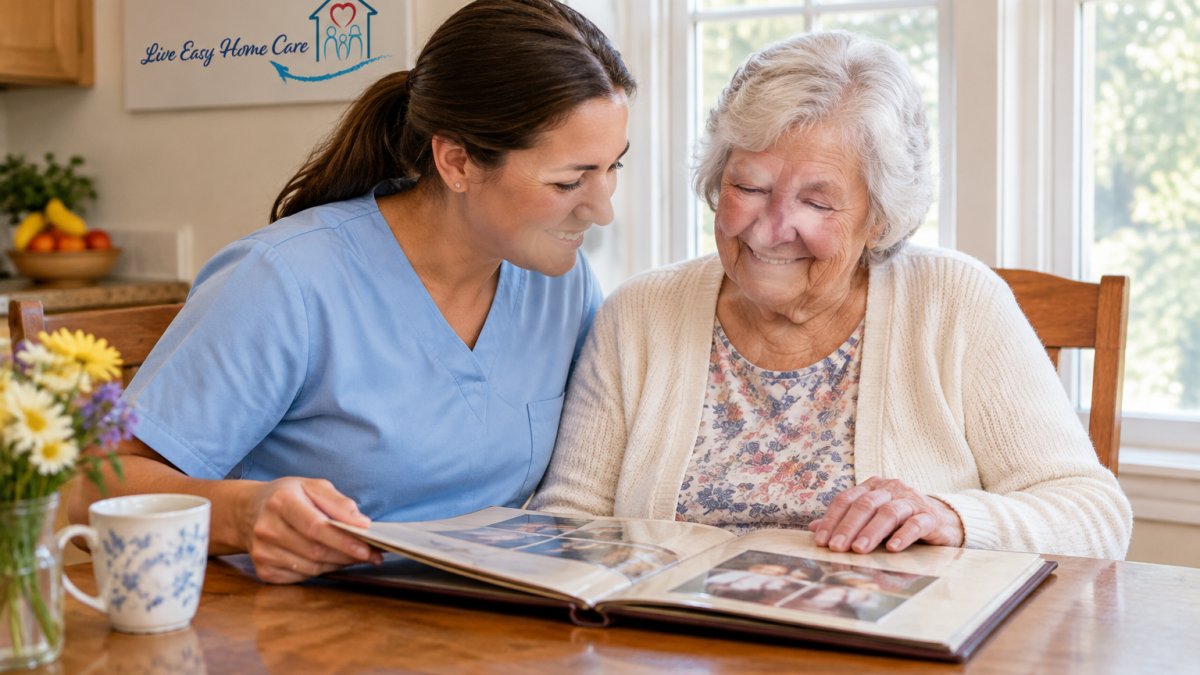
Communication and Behavioral Symptoms
Communication training matters more than families expect. A caregiver learns to give one instruction at a time, use calm tone and body language, and avoid arguing with a person who is confused. Behavioral symptoms such as agitation or repeated questions are treated as communication, not defiance.
A 2020 review led by researcher M. Gkioka on dementia staff training effectiveness examined how such training affects dementia knowledge and communication skills. The takeaway for families is simple: ask whether the caregiver was trained in de-escalation, not just safety rules.
Safety, Abuse Prevention, and Person-Centered Care
Person-centered care means the plan fits the individual’s history, preferences, and routines, not a generic checklist. Safety training covers fall prevention, medication reminders, wandering risk, and recognizing signs of neglect or abuse. Watch out: a caregiver who cannot explain how they would respond to a fall or a sudden confusion episode has not been adequately trained, regardless of what the brochure says.
How to Become a Certified Dementia Caregiver
Becoming a certified dementia caregiver is not a single, government-issued license. In the United States, there is no federal “dementia caregiver” credential.
Family caregivers. If you are caring for a parent or spouse at home, you are generally not legally required to complete dementia training. Most families pursue education voluntarily through Area Agencies on Aging, hospital community programs, or nonprofit offerings.
Agency-employed direct-care workers. If you are hired by a home care agency, your training requirements are set by a combination of state rules and the agency’s own policies.
Licensed professionals. Registered nurses, licensed practical nurses, and social workers follow state licensure rules, and dementia training typically appears as continuing education rather than a standalone certificate. Licensees can verify continuing education requirements through their state licensing board.
A common pattern for the voluntary certification route looks like this:
- Confirm whether your state, employer, or licensing board requires a specific dementia training program, do not assume a national certificate satisfies a state rule.
- Enroll in a recognized course covering person-centered care, communication, behavioral symptoms, and safety.
- Complete the required training hours and pass the course assessment.
- Keep the certificate current through annual or continuing education, since most voluntary credentials require renewal.
- Pair formal training with supervised hands-on experience, because classroom hours alone do not build the judgment that dementia care demands.
Watch out: a caregiver who lists a certificate but cannot describe the curriculum behind it may have completed an awareness-only course that never tested hands-on skills. Ask for the course outline, not just the certificate.
If you are hiring rather than training, our guide on how to find a caregiver for a dementia patient walks through the practical search process, including how to phrase questions about training during the interview.
Free Dementia Training for Caregivers: What’s Available and What to Watch For
Free dementia training for caregivers is sometimes available through nonprofits, Area Agencies on Aging, hospital community programs, and online courses from established organizations. Free is not the same as sufficient, though. Some short courses cover awareness only and skip hands-on care skills.
Family caregivers often benefit from pairing a free course with a support group. Our guide to dementia caregiver support groups explains what ongoing support adds beyond a one-time class. Local hospitals and senior centers are worth calling directly, since community workshop schedules change often.
Questions to Ask a Dementia Caregiver Before You Hire
The right questions separate real training from a friendly interview. Ask each caregiver directly, and listen for specifics rather than general reassurance.
- What dementia training did you complete, and who provided it?
- How do you respond when a person with Alzheimer’s doesn’t recognize you?
- Describe how you redirect someone who becomes agitated.
- What would you do if my parent refused medication or food?
- How do you handle a fall or a sudden change in condition?
- Can you describe a person-centered care plan you’ve followed?
Our article on what makes a good caregiver gives you a fuller question list to bring to the interview.
How to Verify a Caregiver’s Training and Assess Program Quality
Verification is where families regain control, but most guides stop at “ask for the certificate.” The harder question is how to confirm that the certificate means what it appears to mean, and how to separate in-home care training from the facility-based rules that dominate most search results.
Separate home care from facility rules first. Much of the dementia training literature online concerns nursing homes and assisted living, where federal and state rules for nurse aides and direct-care staff are more prescriptive.
Verify the credential in four steps.
- Ask for the certificate itself, not a verbal summary, and note the issuing organization.
- Confirm the issuer is a recognizable training body or an accredited agency program, not a generic online quiz site.
- Check the issue date and any renewal requirement, a credential that never expires is a signal the training was awareness-level.
- Ask the agency for its written training policy, including dementia-specific hours and supervision structure.
Assess program quality, not just presence. A strong dementia training program includes communication skills, behavioral symptom management, safety and abuse prevention, and an assessed learning outcome, meaning the caregiver was tested, not just shown a video.
Accreditation from a recognized body such as ACHC gives you an external quality benchmark to check. Our page on how certified caregivers ensure safe, consistent home care explains what that accreditation means in daily practice.
| What to check | How to check it | Red flag |
|---|---|---|
| Certificate and issuer | Request a copy; confirm the organization | Vague or missing paperwork |
| Training hours and topics | Ask for the course outline | Awareness-only course |
| Assessment method | Ask whether skills were tested | No evaluation at all |
| Continuing education | Confirm renewal cycle | Credential never renewed |
| Supervision and care plans | Request the agency’s written policy | No plan in place |
Watch out: a caregiver who cannot explain how they would respond to a fall or a sudden confusion episode has not been adequately trained, regardless of what the brochure says.
Book a Care Consultation with Live Easy Home Care
Matching trained caregivers to a parent with dementia takes more than a certificate. It takes continuity, supervision, and a plan built around the person. Live Easy Home Care provides ACHC-accredited in-home support across Northern New Jersey, including specialized dementia and Alzheimer’s care, 24/7 live-in care, and personalized care plans with a focus on fall prevention and health monitoring.
If you want a realistic picture of what in-home dementia care involves, read our guide to the cost of in-home dementia care before you call. Then get started with Live Easy Home Care and build a care plan that keeps your parent safe, dignified, and at home.
Frequently Asked Questions
Is dementia training mandatory for in-home caregivers in New Jersey?
It depends on the caregiver’s role and employer. Requirements differ by state and by role, and family caregivers hired privately are generally not subject to the same requirements as agency staff. Agency-employed caregivers usually receive dementia care training as part of onboarding and ongoing in-service education. Because rules change, confirm current requirements with your state’s licensing authority or the agency you hire, and ask for written proof of completed dementia care training.
What should dementia caregiver training cover for care at home?
Quality dementia caregiver training should cover how Alzheimer’s disease and other dementias affect memory, judgment, and daily activities; communication skills for someone who is confused or repeats questions; recognizing and responding to behavioral symptoms such as agitation or sundowning; safety and fall prevention; medication reminders; personal care with dignity; and abuse and neglect prevention. Person-centered care, which treats the person’s history and preferences as the starting point, should run through the whole curriculum. Ask to see the course outline and how many training hours it includes.
How can I verify a caregiver’s dementia care training?
Ask the agency for the caregiver’s training records, including course names, hours, completion dates, and any certification or credential numbers. Ask which organization issued any certificate and confirm it directly with that issuer. Also ask how the agency assesses competency, such as skills checklists or supervised visits, and whether caregivers receive annual or in-service dementia training after hire.
Are there free online dementia training courses for caregivers?
Yes. Free dementia training for caregivers is sometimes offered through reputable sources such as established national organizations and some state-funded caregiver support programs. These courses are a good starting point for family caregivers who want to understand the disease and improve communication. Keep in mind that free online courses may not count toward a professional certification or satisfy an employer’s requirements. If you need a credential, confirm in advance that the course is recognized by the agency or licensing body involved.
How can caregivers respond to agitation or challenging dementia behaviors?
First, look for a cause: pain, hunger, fatigue, a noisy room, or a change in routine often triggers agitation. Stay calm, speak slowly, and avoid arguing or correcting. Redirect to a familiar activity or move to a quieter space. Research on dementia care models notes that behavioral symptoms are often a form of communication, so training that teaches caregivers to observe patterns and respond to unmet needs is more effective than restraint or confrontation. Report new or worsening behaviors to the care team so a clinician can rule out medical causes.
How do I care for someone with dementia at home safely?
Start with a home safety review: remove tripping hazards, add nightlights, secure medications, and lock away dangerous items. Keep a consistent daily routine and post reminders for meals and appointments. Supervise bathing, dressing, and stair use as abilities change, and consider a medical alert device. Build a support team that includes a physician familiar with dementia, and bring in trained in-home help before a crisis. Agencies that specialize in dementia care can assess the home and create a personalized care plan.